Tour Operator & DMC

Birdwatching safari in Madagascar

Discovering Madagascar’s endemic birds, in tune with the rhythms of the forests and the seasons.

◷
Duration

11 days · 10 nights

⌖
Régions

✦
Ideal season

April to November

↗
Flexibility

100 % personnalisable

Guide price

2 500 €

An exclusive journey combining observation, local immersion, and ecotourism.

from the forests of Andasibe to the Mahavavy-Kinkony Complex

Treat yourself to a rare immersion in the heart of Madagascar, between tropical forests, wild
landscapes, and exceptional wetlands.
This itinerary takes you from the dense evergreen rainforests of Andasibe-Mantadia National Park to the dry landscapes of Ankarafantsika, and on to the spectacular Mahavavy-Kinkony Complex, a vast wetland in north-western Madagascar and a true sanctuary for birds.
Ideal birdwatching season: April to November.
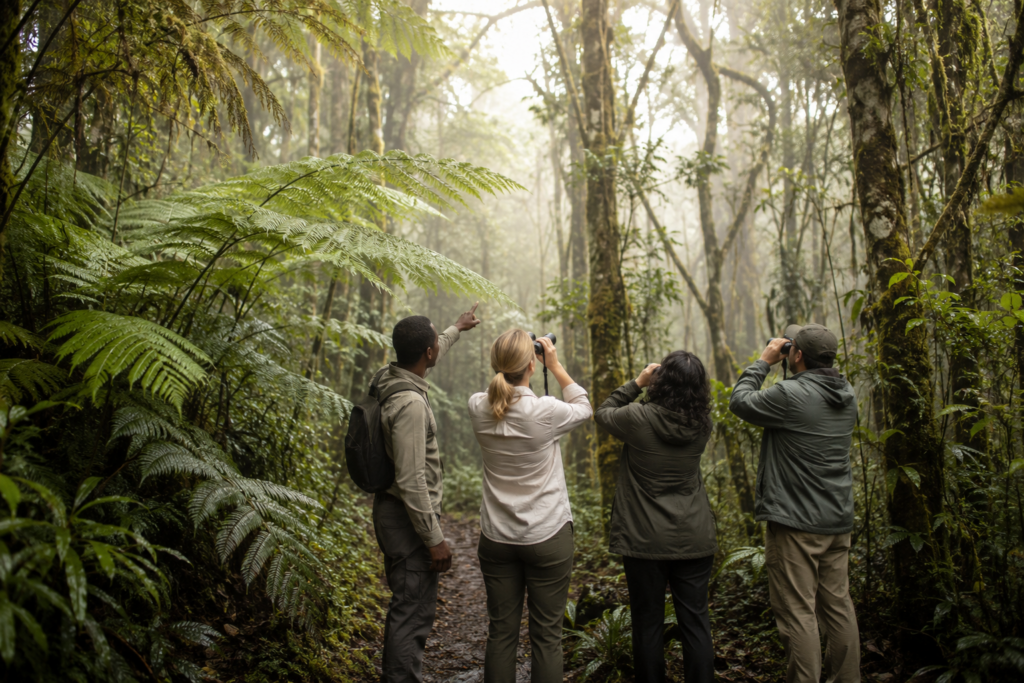
This tour is accompanied by a birdwatching specialist guide, while local trained guides lead the visits on site. Accommodation ranges from comfortable lodges to simpler options in remote areas, offering an authentic immersion in nature.
An exclusive journey combining birdwatching, local immersion, and ecotourism.
Ideal for bird and nature lovers looking for an authentic, off the beaten track experience.
Highlights

  1. Specialized guide

    Dedicated guidance for identification and observation.

  2. Contrasting habitats

    Rainforest, dry forest, lakes, mangroves, and coastal areas.

  3. Endemic species

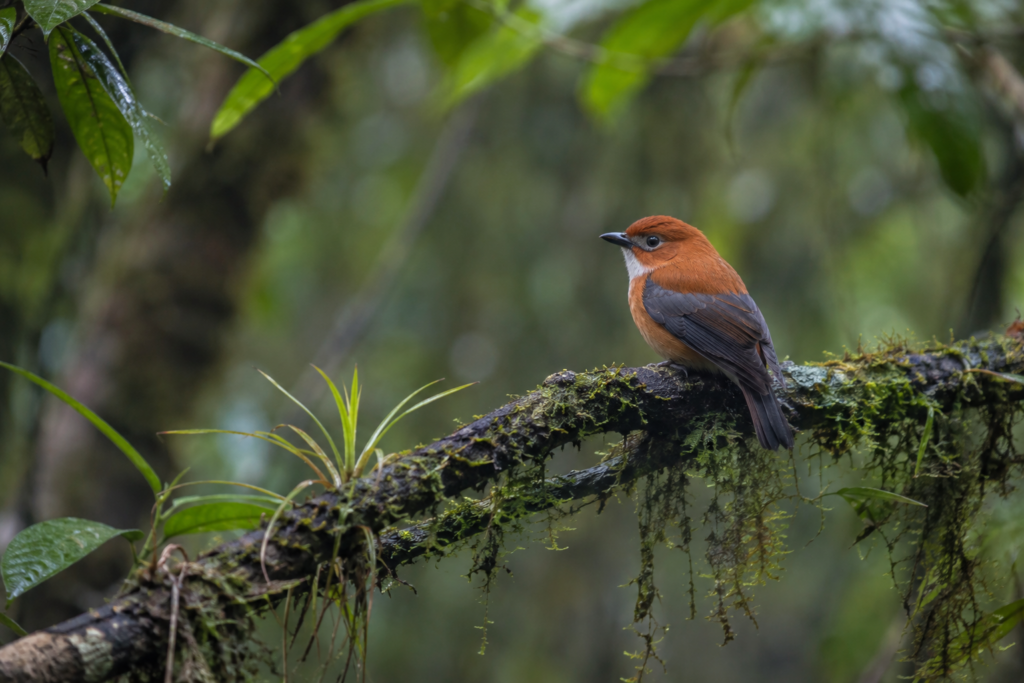
    Vangas, couas, mesites, asities, and rare waterbirds.

  4. Small private group

    A pace adaptable to sightings and natural conditions.

Programme

Carte de l’itinéraire

Cliquez sur une étape pour suivre le parcours.

First steps into nature Welcome to the heart of nature. After your arrival in Antananarivo, begin with a visit to Tsarasaotra Park, a remarkable green oasis in the middle of the city. Surrounded by century-old camphor and eucalyptus trees, bordered by grasses and Cyperus plants, this exceptional site was created in March 2001 by the descendants of Émile Ranarivelo and is managed by an association dedicated to its protection and promotion. Listed as a Ramsar site, Tsarasaotra is a private park recognized as an important breeding and refuge area for many bird species, including Tachybatus pelzelnii (Madagascar Little Grebe), Bubulcus ibis (Cattle Egret), Ardeola ralloides (Squacco Heron), Egretta dimorpha (Dimorphic Egret), Dendrocygna viduata (White-faced Whistling Duck), Sarkidiornis melanotos (Knob-billed Duck), Caprimulgus madagascariensis (Madagascar Nightjar), Streptopelia picturata (Madagascar Turtle Dove), Merops superciliosus (Madagascar Bee-eater), Acrocephalus newtoni (Madagascar Swamp Warbler), Terpsiphone mutata (Madagascar Paradise Flycatcher), Foudia madagascariensis (Madagascar Red Fody), Nectarinia souimanga (Souimanga Sunbird), and Dicrurus forficatus (Crested Drongo). After lunch, drive to Andasibe, a lush haven renowned for its exceptional biodiversity and emblematic lemurs. In the evening, enjoy a unique experience, a night walk near Analamazaotra National Park in search of glowing geckos and nocturnal lemurs. Check in and overnight at an ecolodge nestled in the heart of the forest.

In search of endemic birds Early morning departure for Andasibe National Park, one of Madagascar’s best sites for observing endemic birds. The Madagascar Little Grebe breeds on the reserve lake and can be seen throughout the year. The Madagascar Pond Heron may be observed around the fishponds and lake, while the Cryptic Tetraka, Pitta-like Ground Roller, and Short-legged Ground Roller are found along the main trail. On the hill overlooking the ponds, you may also have the chance to spot the discreet Dusky Tetraka and Red-breasted Coua, two rare species for which Périnet is one of the few easily accessible sites. The site is also excellent for observing many widespread endemic species, including the Madagascar Crested Ibis, Blue Coua, Velvet Asity, Sunbird-asities, Wedge-tailed Tetraka, Nuthatch Vanga, and Tylas Vanga. In the afternoon, enjoy a local immersion with an association involved in reforestation and environmental education. Visit the village, meet local residents, and discover traditional craftsmanship. Overnight at an ecolodge.

Searching for rare species A few kilometres north of Périnet, Mantadia National Park opens the door to a wilder and less-visited forest. The park shelters rare species that are absent from Périnet, and the visit is well worth the journey. Mantadia is renowned for some of Madagascar’s most sought-after endemic birds, including the Madagascar Serpent Eagle, Brown Mesite, Red-breasted Coua, Madagascar Red Owl, Scaly Ground Roller, and Helmet Vanga. The best period to observe these remarkable species is from September to November. Free afternoon to rest or enjoy the surrounding area. Overnight at an ecolodge nestled in nature.

Return to the capital Free morning. In the afternoon, return to Antananarivo, Madagascar’s capital city. Overnight at the hotel.

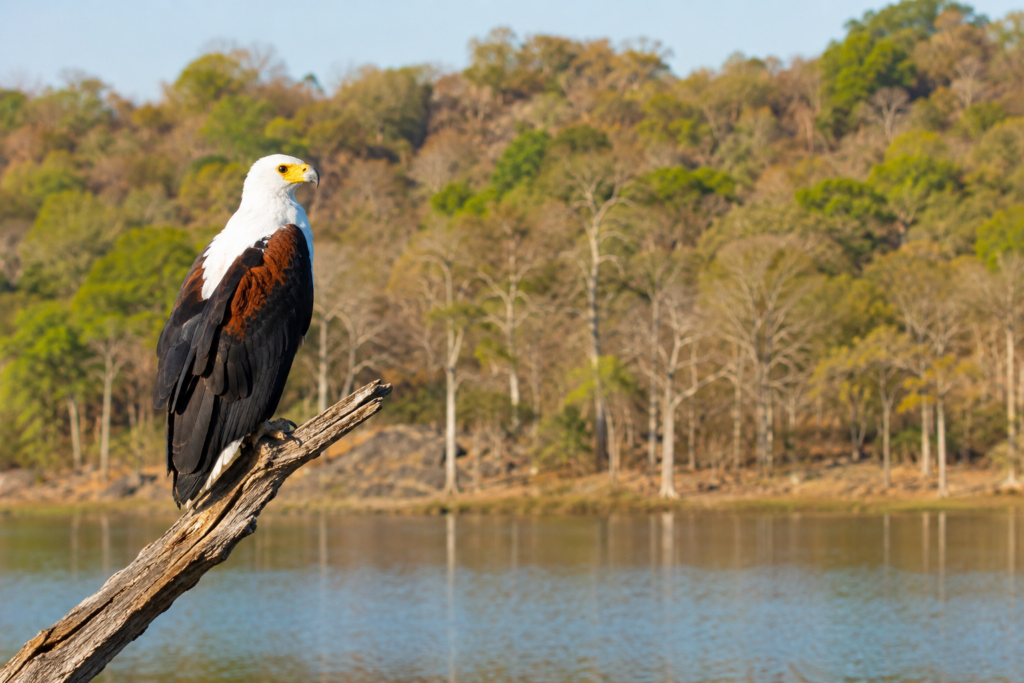
Heading west into the wild Depart towards western Madagascar and Ankarafantsika National Park, one of the island’s most remarkable birdwatching destinations. The park is especially known for the presence of the large endemic raptor, Haliaeetus vociferoides; the Madagascar Fish Eagle. In addition to the park’s characteristic dry deciduous forest, the nearby Amboromalandy dam and surrounding wetlands, located about 30 km west of the park along National Road 4, offer excellent opportunities to observe a rich diversity of aquatic species. Throughout the journey, admire the semi-desert landscapes as you cross the Tampoketsa plateau. Check in and overnight at the ecolodge. Get ready for an early start the next morning to explore the park.

Immersion in the dry forest Wake up very early for a guided visit of the park and the chance to observe the rich birdlife of the forest. Humblot’s Heron and Madagascar Jacana are frequently seen, while Bernier’s Teal can often be spotted in specific areas. Two main trails, Botanical Garden A and B, cross the most humid part of the forest and offer opportunities to spot rare species such as the White-breasted Mesite and Schlegel’s Asity. Other trails lead towards the drier areas of the sandy plateau, a favored habitat for the White-breasted Mesite and the highly localized Van Dam’s Vanga. In the Ampijoroa area, you may also admire several emblematic species, including Haliaeetus vociferoides; the Madagascar Fish Eagle, Falco zoniventris; the Banded Kestrel, Schetba rufa; the Rufous Vanga, Coquerel’s Coua, Red-capped Coua and the Madagascar Pygmy Kingfisher. Return to camp for lunch. In the afternoon, enjoy a boat trip on Lake Ravelobe, located just beside the park. A true wildlife sanctuary, the lake is home to many species, including Terpsiphone mutata; the Madagascar Paradise Flycatcher, Copsychus albospecularis; the Madagascar Magpie-robin, Hypsipetes madagascariensis; the Madagascar Bulbul, the Vasa Parrot, and several coua species. Lake Ravelobe is also renowned for sheltering a pair of Madagascar Fish Eagles, one of the rare and majestic symbols of the island’s biodiversity. Overnight at the ecolodge.

Discovering the City of Flowers Depart for Majunga, known as the “City of Flowers” and one of Madagascar’s most cosmopolitan crossroads. In the late afternoon, enjoy a spectacular sunset before visiting the Red Circus, a fascinating site where different colors of sand are collected and used by local artisans to create beautifully decorated bottles with intricate patterns. Overnight at the hotel.

Deep immersion in wild and preserved nature After breakfast, depart towards Katsepy and transfer to the Barriquand quay to reach Namakia, in the heart of north-western Madagascar. Along the way, discover the region’s typical landscapes: vast natural expanses, Satrana palm forests (Bismarckia nobilis), and sugarcane plantations a first immersion into Madagascar’s ecotourism landscapes. After lunch in Namakia, board a motorized pirogue to cross the Mahavavy Delta, one of Madagascar’s most remarkable birdwatching sites, heading towards Ampitsopitsoka. This journey through a preserved ecosystem is ideal for bird observation, with a wide diversity of aquatic and terrestrial species in their natural habitat. An authentic experience combining wild nature, exceptional biodiversity, and responsible tourism in Madagascar, true to the spirit of Rufous Ecotravel. In the late afternoon, check in, dinner, and overnight in a simple, clean, and authentic village hotel.

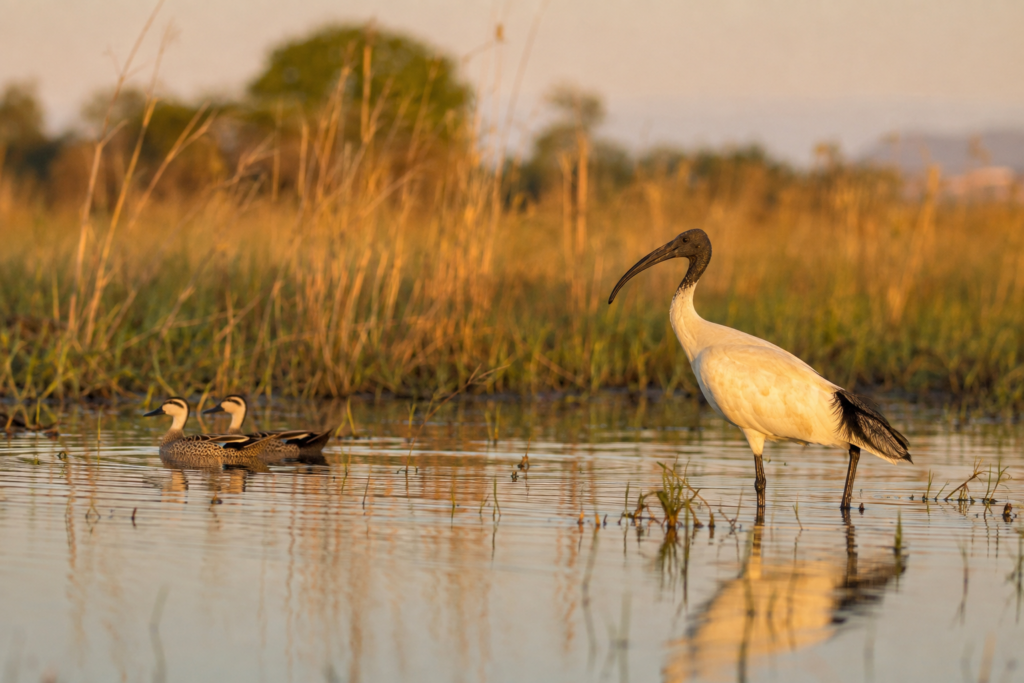
Birdwatching safari and the Madagascar Sacred Ibis This day is dedicated to birdwatching. Accompanied by our guide, you will have the opportunity to observe several emblematic and endemic species, including: Threskiornis bernieri; Madagascar Sacred Ibis Anas bernieri , Madagascar Teal The site also shelters a rich diversity of aquatic and coastal birds, including Egretta dimorpha; Dimorphic Egret, Phoenicopterus ruber; Greater Flamingo, Phoeniconaias minor; Lesser Flamingo, Charadrius marginatus; White-fronted Plover and Sterna bengalensis; Lesser Crested Tern. A unique immersion in a preserved ecosystem, offering ideal conditions for wildlife photography and biodiversity observation. Towards the end of the afternoon, return to the village. Dinner and overnight at the hotel.

Ecotourism in Madagascar and visit to Antrema Biocultural Site After breakfast, depart for Majunga with a stop to visit the Antrema Biocultural Site, a unique protected area in north-western Madagascar. This exceptional site combines terrestrial and marine ecosystems: dry forests on dunes and lateritic soils, mangroves, freshwater lakes, and a 1,000-hectare marine park. Among the lemurs, Propithecus coronatus is the emblematic species of the site, symbolizing the close relationship between nature and local culture. The Antrema protected area plays an important role in the sustainable development of local communities: • Local raw materials are used for basketry, the main income-generating activity for women. • Marine fishing is another essential source of income for local residents. Site management is based on a collaborative model involving the local association Antrema Miray and the MNHN, the National Museum of Natural History. The Ampanjaka or prince, Tsimanendry ensures respect for the site’s sacred rules, such as the ban on night fishing and lemur hunting and chairs the local management committee. Arrival in Majunga and transfer to the hotel.

Ambohimanga, Madagascar’s UNESCO World Heritage Site Depending on your flight schedule, transfer to Majunga airport and fly back to Antananarivo. On arrival, discover the capital and visit Ambohimanga, a former royal palace listed as a UNESCO World Heritage Site in 2001 and one of Madagascar’s most important historical and spiritual landmarks. Enjoy some free time for last-minute souvenir shopping at the craft market before transferring to your hotel or to the airport for your international flight.

What’s included
in your trip.

Included

  • Ground transportation as per the itinerary
  • Accommodation for 10 nights
  • Specialized ornithology guide
  • Local guides and site entrance fees included
  • Navigating the Mahavavy Delta

Not included

  • International flights
  • Domestic flight Majunga – Antananarivo
  • Personal insurance and assistance
  • Drinks, gratuities, and personal expenses
  • Optical equipment and services not listed

* Tarif, inclusions et exclusions présentés uniquement pour valider la mise en page. Les données contractuelles seront remplacées par celles de Rufous Ecotravel.

Votre voyage commence ici

Parlons de votre
Madagascar.

Choisissez un circuit ou imaginez le vôtre. Notre formulaire vous guide simplement, sans engagement.

× ❮ ❯